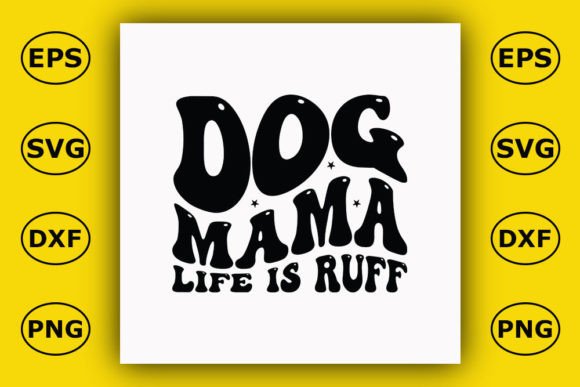
Retro Dog T-shirt Design, Dog Mama Life
As an embroidery designer who spends half my day troubleshooting tension issues and the other half admiring clean digitizing, I approach every new download with a healthy dose of skepticism. The market is flooded with "cute" graphics that fall apart when translated into thread. That is why I decided to put Retro Dog T-shirt Design, Dog Mama Life through its paces. I am not just looking at the preview image; I am looking at how this design will behave on fabric, how it will hold up after twenty washes, and whether it has enough visual weight to justify a premium price point for my small business clients.
The product description notes that you receive four files: SVG, PNG, EPS, and DXF. While these are standard formats for cutting machines like Cricut and Silhouette, my primary focus here is evaluating its viability as a machine embroidery design. Often, vector files provided for vinyl cutting do not translate well into stitch paths. They can be too thin, lack necessary underlay, or have lettering that becomes illegible when stitched. My review focuses on the potential of this graphic to function effectively in an embroidery context, specifically for those of us creating high-quality handmade products.
First Impressions: Mood and Visual Personality
The immediate vibe of Retro Dog T-shirt Design, Dog Mama Life is nostalgic warmth. The retro aesthetic suggests a vintage font style and perhaps a slightly distressed or rounded illustration style, which tends to age well in embroidery. In the world of custom apparel, nostalgia sells. It feels personal, cozy, and approachable. This is not a stark, modern minimalist design; it is a design meant to evoke emotion.
For a handmade product, emotional connection is key. When a customer sees a design that says "Dog Mama Life," they are buying into an identity, not just a shirt. From a design perspective, the layout appears balanced. If the text curves around a dog silhouette, it creates a circular composition that works beautifully on chest placements or centered back prints. However, the success of this mood depends entirely on execution. A poorly digitized retro font can look messy and cheap. We need to ensure the stitch density supports the curves without causing puckering.
Real-World Application: Where This Design Shines
I envision this design thriving in specific niches. Let’s talk about a real scenario: preparing a batch of custom gifts for a client’s wedding party or a bridal shower. The bride loves dogs. She wants something unique for her bridesmaids. Retro Dog T-shirt Design, Dog Mama Life fits perfectly here. It is personal enough to feel special but broad enough to appeal to any dog lover.
Consider a sweatshirt embroidery project. Imagine a heather grey crewneck with this design placed over the heart. The retro colors—likely muted teals, oranges, or creams—would pop against the soft texture of the fleece. Alternatively, think about a tote bag design. A canvas tote embroidered with this motif is a staple craft fair item. It is practical, durable, and highly giftable. The design’s theme aligns naturally with everyday carry items, making it a strong candidate for Etsy seller listings targeting parents, teachers, or pet owners.
It also works exceptionally well for embroidered patch applications. Many crafters love adding patches to denim jackets or backpacks. If the design is digitized with a clean edge or a satin border, it can serve as a standalone badge. This versatility increases its value as a digital embroidery file because one asset can generate multiple revenue streams: shirts, bags, hats, and accessories.
Technical Considerations and Potential Pitfalls
While the concept is strong, we must address where this design should be used carefully. Embroidery is a physical medium, and limitations exist. First, consider the hoop size. If the design includes extensive lettering, small details in the dog’s facial features may become lost if the hoop is too small or if the fabric shifts during stitching. Always test the design on scrap fabric first to check alignment.
Fabric choice is critical. This design might struggle on highly textured fabrics like heavy waffle knit or loose-weave linen unless a proper stabilizer is used. On stretchy knits, such as thin t-shirt material, the fill stitch areas could distort the garment if the underlay is insufficient. I recommend using a cut-away stabilizer for knits to prevent warping over time. For woven fabrics like cotton twill or denim, the structure is more forgiving, allowing for finer details.
Color contrast is another factor. The retro palette must stand out against the base fabric. On dark fabrics, light threads are essential. If the design relies on subtle shading, it may get lost in the weave. I often advise clients to create black-and-white mockups to check legibility. If the text reads clearly in grayscale, it will likely embroider well. Also, inspect the small details. If the "Retro" font has tiny serifs or intricate curls, ensure your machine can handle the precision. Sometimes, simplifying the digitization by removing tiny decorative elements results in a cleaner, more professional finish.
Impact on Product Value and Brand Consistency
Using a well-executed design like Retro Dog T-shirt Design, Dog Mama Life elevates your brand. Customers can tell the difference between a heat-transfer vinyl job that cracks after a month and a properly stitched embroidery piece. The texture of the thread adds depth and perceived value. When you offer personalized gifts with high-quality embroidery, you build trust. Buyers are willing to pay more for items that look professionally finished.
This design supports brand consistency if you position yourself as a purveyor of cozy, pet-friendly lifestyle goods. It appeals to the same demographic that buys organic skincare, artisanal coffee, and handmade jewelry. By curating designs that fit this aesthetic, you create a cohesive shop experience. Whether you are selling small shop products or large-scale merchandise, maintaining a consistent visual language helps customers recognize your work instantly.
Practical Designer Notes for Implementation
If you decide to use this graphic for your craft business, follow these steps to ensure success:
- Test Stitch Density: Review the file settings if possible. Ensure the fill stitches are not too dense, which can make the fabric stiff and uncomfortable, especially on baby clothes or delicate fabrics.
- Check Thread Colors: Compare your available thread spools against the design’s color palette. Retro tones require specific shades; generic brights can ruin the vintage effect. Use a thread chart to find close matches.
- Confirm Licensing: Before producing commercial embroidery items, verify the license terms. Some digital assets allow personal use only, while others permit commercial sales of finished goods. Never assume permission; always read the fine print.
- Stabilizer Selection: Match the stabilizer to the fabric weight. Light tear-away for stable wovens, sturdy cut-away for knits. This prevents distortion and ensures the satins stitch edges remain crisp.
- Mockup Testing: Create printable mockups to show clients before committing to production. This reduces returns and builds confidence in your design assets.
In conclusion, Retro Dog T-shirt Design, Dog Mama Life has strong potential for apparel decorators and creative entrepreneurs. Its nostalgic charm resonates with a wide audience, and its versatility allows for application across various product types. However, success lies in the technical execution. By paying attention to fabric choice, stabilization, and stitch quality, you can transform this graphic into a best-selling embroidery project that delights customers and strengthens your brand reputation. Treat it with the care it deserves, and it will reward you with both aesthetic appeal and commercial viability.