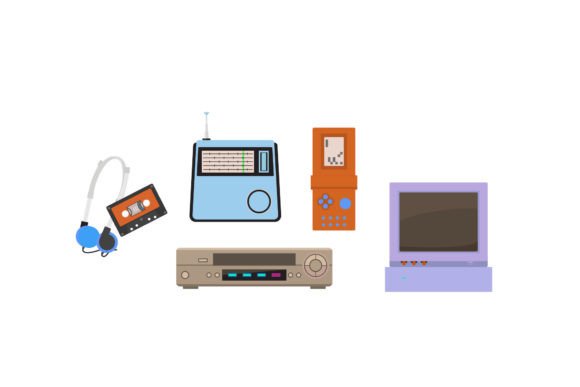
Retro Digital: A Designer's Take on Real Embroidery Use
I have spent years reviewing digital assets for the embroidery industry, sifting through thousands of files to find designs that actually hold up under a needle. Most "digital illustrations" look great on a screen but fall apart when converted into thread. Today, I am looking at Retro Digital, a graphic that promises a nostalgic vibe with a modern twist. As an experienced designer and product reviewer, my goal is not just to describe the file, but to tell you exactly how this design behaves in the real world of machine embroidery.
The first impression of Retro Digital is one of clean, geometric nostalgia. The visual personality suggests a mid-century modern aesthetic mixed with pixel art influences. It feels like something you would see on a vintage arcade cabinet or a retro-futuristic poster. For a craft business owner or an Etsy seller, this mood is gold. It immediately signals quality and style without needing complex text or cluttered backgrounds. When you open the file, the layout is balanced, making it an ideal candidate for various projects ranging from custom apparel to boutique branding.
However, a pretty image does not guarantee a successful stitch-out. To understand if Retro Digital is ready for your next project, we need to simulate how it translates from a 1920 px by 1280 px canvas into physical thread. Let's imagine a real-life scenario: You are preparing a custom embroidered tote bag for a local artisan market. You want to feature Retro Digital as the centerpiece of your booth display. The design needs to pop against the canvas fabric, remain legible after hours of wear, and justify a higher price point for your handmade products.
In this context, the strength of Retro Digital lies in its clear lines and distinct shapes. The geometry works exceptionally well with satin stitch, which is often used for outlining and lettering in these types of graphics. If you are stitching this onto a heavy-duty cotton canvas tote, the design will likely maintain its structural integrity. The "Retro" theme pairs perfectly with earth tones or bold primary colors, allowing you to create a cohesive color palette that appeals to customers looking for unique, handmade gifts. For a small shop product, this level of visual clarity helps build customer trust; it looks intentional and professional rather than rushed or blurry.
But let's talk about where this design might struggle. Not every surface is created equal. If you decide to apply Retro Digital to a stretchy fabric like a jersey t-shirt or a thin polyester blend, you need to be cautious. The sharp angles and potentially dense fill areas could cause puckering if the stabilizer isn't chosen correctly. Similarly, trying to embroider this on a curved surface, such as a structured cap or a baseball hat, requires careful digitizing adjustments. The straight lines of the graphic might distort if the curve of the hat isn't accounted for during the hooping process.
Another critical factor is the size of the hoop. While the digital preview looks crisp, the physical limitations of your embroidery machine matter. If you are working with a small hoop size, fine details within the Retro Digital illustration might get lost or merge together. This is particularly true if the design includes tiny lettering or intricate decorative accents. In a commercial embroidery setting, where consistency is key, losing those details can ruin the final product value. Therefore, before committing to a large production run, always test the design on scrap fabric that matches your final material. Check the thread color contrast carefully; what looks vibrant on a monitor might appear muddy if the thread shades are too similar to the fabric background.
For those selling personalized gifts or holiday embroidery items, Retro Digital offers a versatile foundation. Imagine using it on a baby onesie for a holiday gift or a kitchen towel for a wedding present. The design's simplicity allows it to blend well with other elements, but you must ensure the stitch density is appropriate. Too much density on a delicate item like a baby garment can make the fabric stiff and uncomfortable. Conversely, too little density might result in a flimsy finish that doesn't stand out. Reviewing the stitch count and adjusting the fill stitch parameters is essential for achieving the right balance between durability and softness.
When considering the file formats available—AI, EPS, SVG, JPG, and PNG—it is crucial to select the right one for your specific workflow. For vector-based embroidery software, the AI or EPS files are usually the best choice, allowing you to scale the design without losing quality. However, remember that converting a raster image (JPG or PNG) into an embroidery file requires careful tracing to avoid jagged edges. Since the product description mentions a canvas size of 1920 px by 1280 px, verify that the resolution is sufficient for your intended output size. If you plan to use this as a printable mockup for your Etsy listings, ensure the image quality remains high so potential buyers can appreciate the detail before purchasing.
There are also specific scenarios where you should approach Retro Digital with extra care. Textured fabrics, such as fleece or boucle, can hide the fine details of the design, making it look less defined. Dark fabrics require a different thread strategy, often involving a underlay stitch to prevent the dark background from showing through the lighter threads. Additionally, if the design is intended for frequent washing, like aprons or workwear, check that the stitches are secure and the design won't snag easily. Dense stitch areas are more prone to breaking threads if the tension isn't perfectly calibrated.
From a business perspective, using a design like Retro Digital can significantly enhance your brand consistency. It provides a recognizable visual identity that customers can associate with your handmade products. Whether you are creating custom apparel, embroidered patches, or digital design assets, having a strong, reliable graphic is half the battle. It elevates the perceived value of your finished product, making it easier to command fair prices in a competitive market. For creative entrepreneurs, this means less time fixing errors and more time designing new collections.
Before you hit the start button on your machine, here are a few practical notes to keep in mind. Always inspect small details closely, especially if you are scaling the design down. Test it in black and white mockups first to ensure the composition works without relying on color. Compare how it looks on light versus dark fabric backgrounds to anticipate any contrast issues. Use proper stabilizer to support the fabric during stitching, and confirm whether the licensing terms allow for both personal and commercial projects. If you are planning to sell finished items featuring Retro Digital, double-check the license agreement to avoid any legal complications.
Ultimately, Retro Digital is a strong contender for anyone looking to add a touch of vintage flair to their embroidery projects. Its clean lines and nostalgic charm make it suitable for a wide range of applications, from holiday gifts to boutique merchandise. By understanding its strengths and limitations, you can leverage this design to create professional, high-quality finished products that your customers will love. Whether you are a hobbyist, a craft business owner, or a seasoned designer, taking the time to evaluate how a design performs in real-world conditions is the secret to success in the world of machine embroidery.